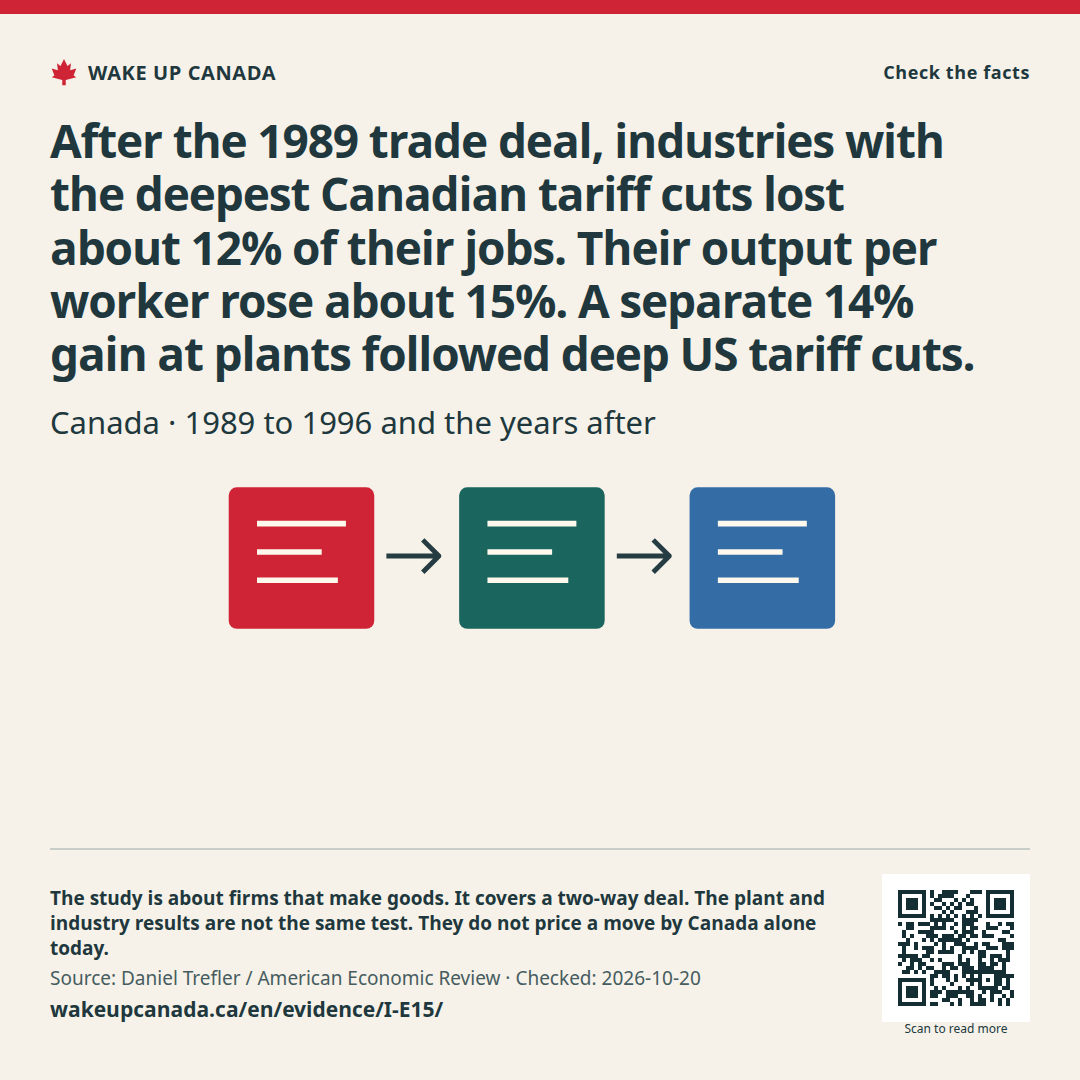
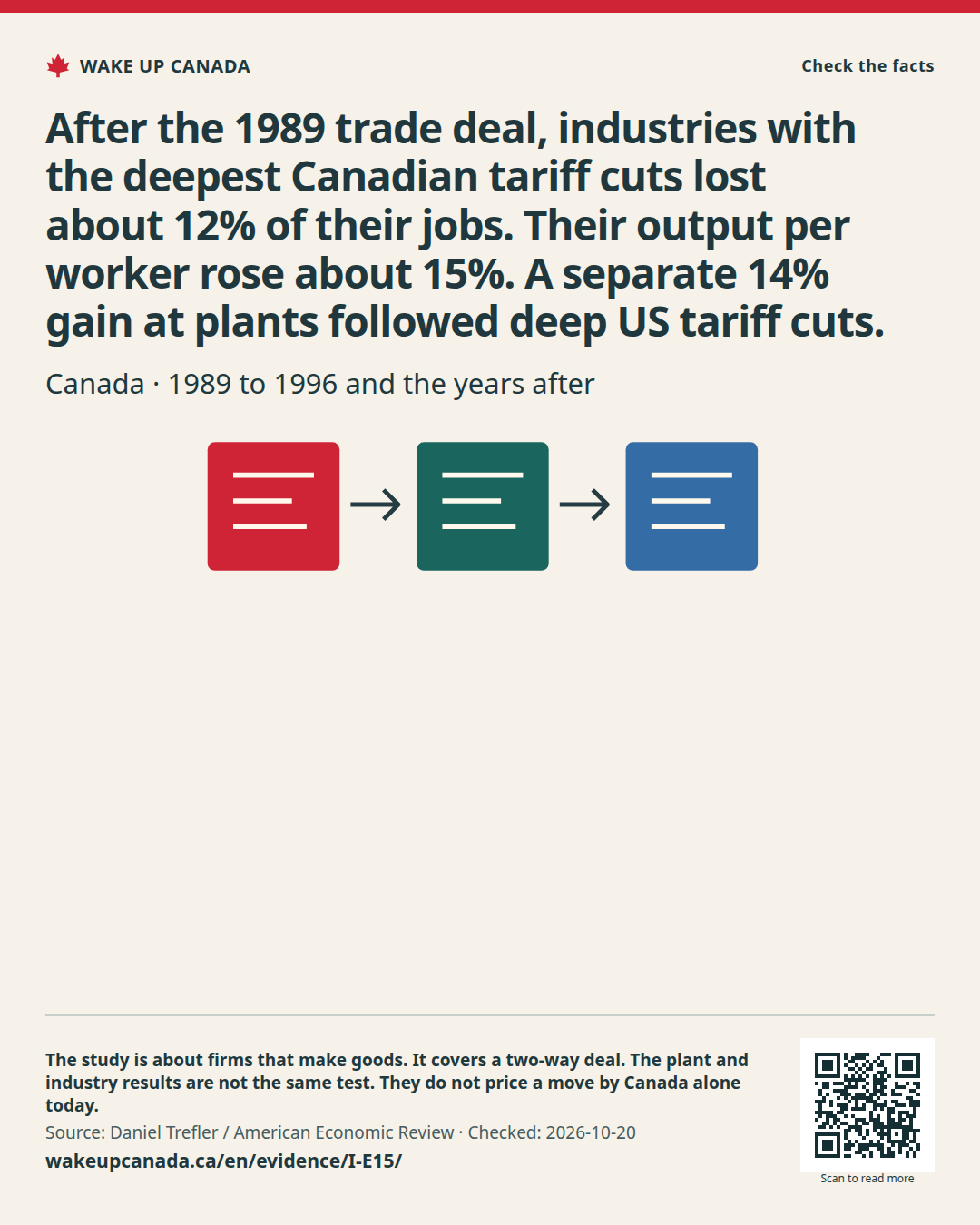
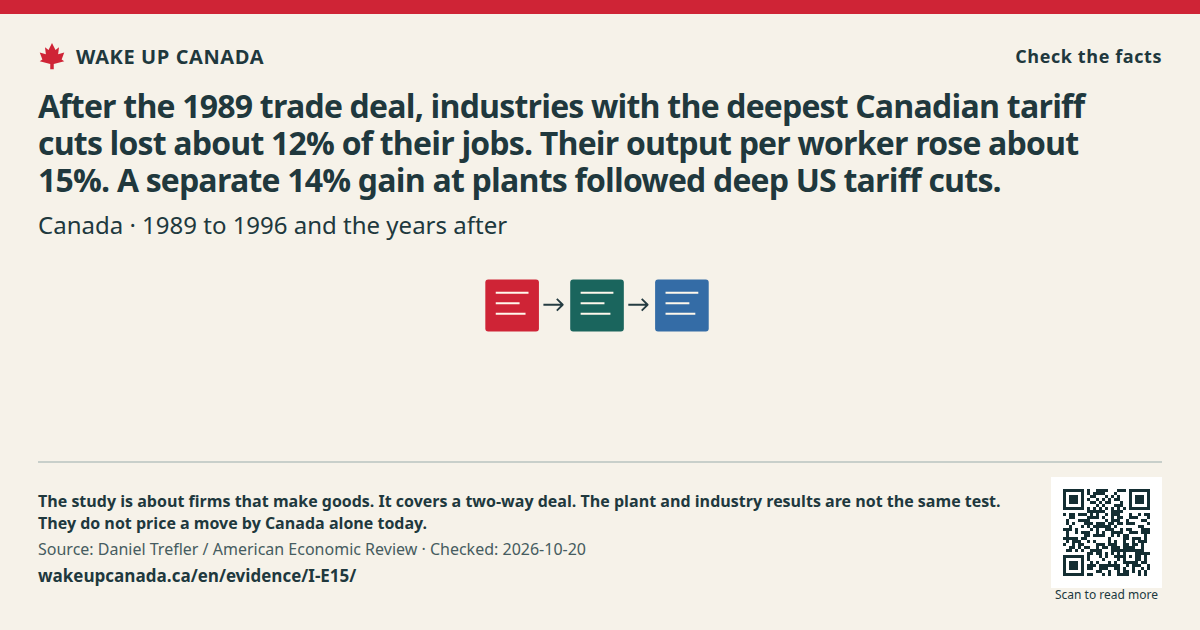
After the 1989 trade deal, industries with the deepest Canadian tariff cuts lost about 12% of their jobs. Their output per worker rose about 15%. A separate 14% gain at plants followed deep US tariff cuts.

Checked 2026-10-20. Each record says what the source can and cannot show.

What this covers

Place: Canada
Time covered: 1989 to 1996 and the years after

What this does not prove

The study is about firms that make goods. It covers a two-way deal. The plant and industry results are not the same test. They do not price a move by Canada alone today.

Read the source

The Long and Short of the Canada-U.S. Free Trade Agreement ↗

Daniel Trefler / American Economic Review · 2004-09

Where to look: Abstract: deepest Canadian cuts, industry employment -12%, industry labour productivity +15%; deepest US cuts, plant labour productivity +14%

Fixes and updates

No fact has changed in this version. If we fix a claim, we will add the date and explain the change here and in our list of fixes.

Sources & fixes →

WAKE UP CANADA

Share the case for change

Help more people see the facts and the plan.

After the 1989 trade deal, industries with the deepest Canadian tariff cuts lost about 12% of their jobs. Their output per worker rose about 15%. A separate 14% gain at plants followed deep US tariff cuts.

Keep the source, date and notes with the image.

Checked:

What this does not show: The study is about firms that make goods. It covers a two-way deal. The plant and industry results are not the same test. They do not price a move by Canada alone today.

wakeupcanada.ca/en/evidence/I-E15/
Scan to open this page
Scan this code to read the full case.

Save an image

If the image opens in a new tab, press and hold it or use your browser’s save tool.

Sources and notes