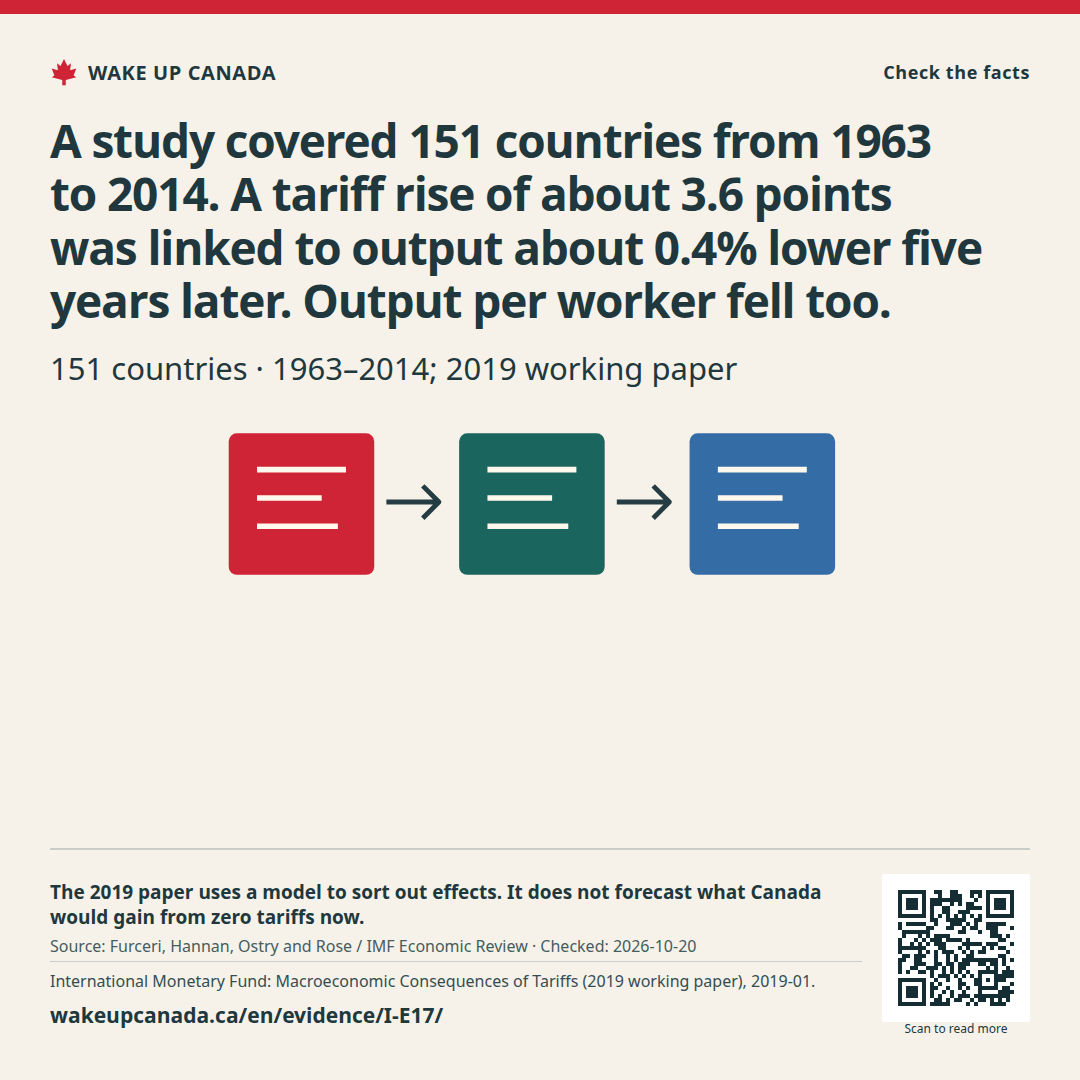
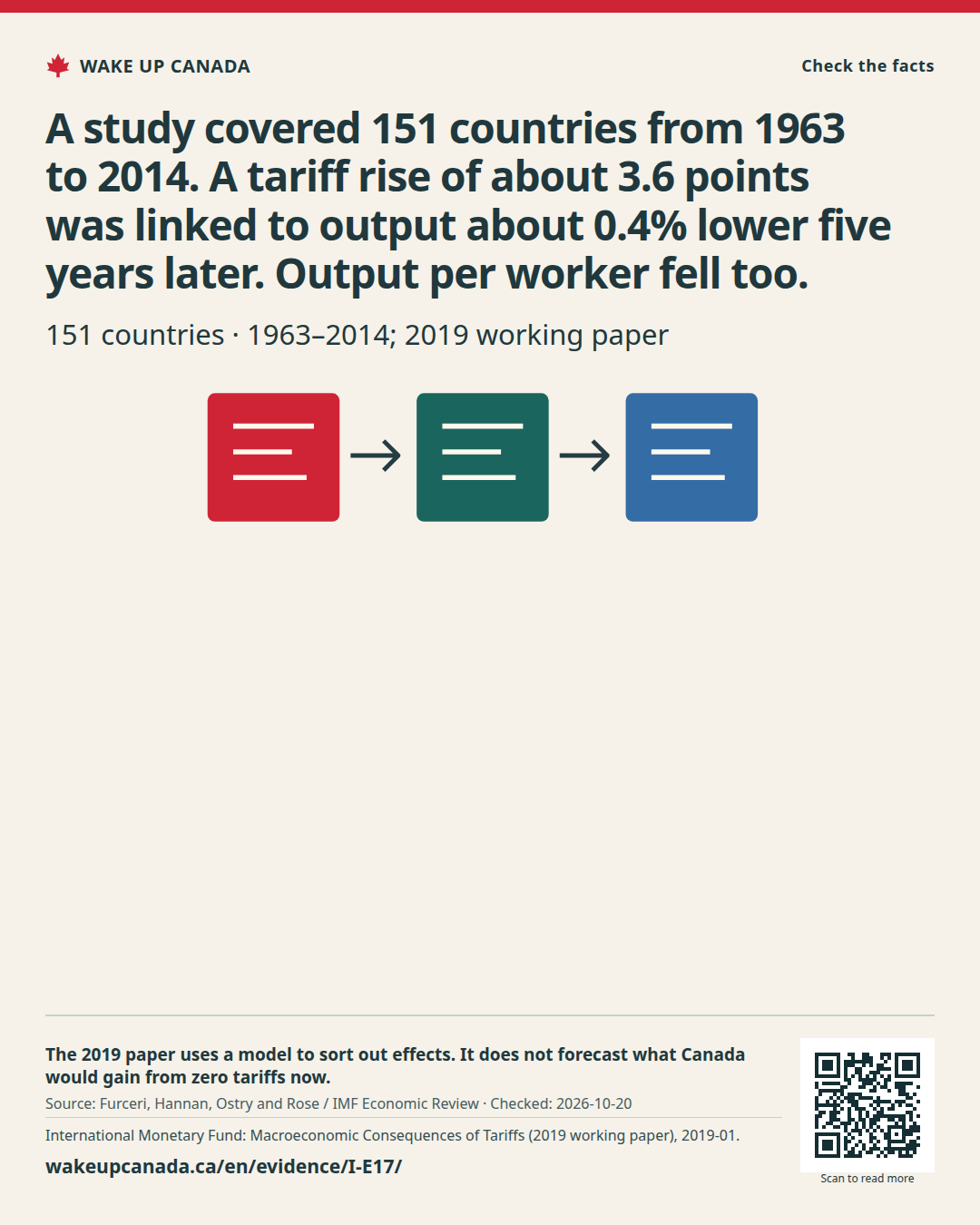
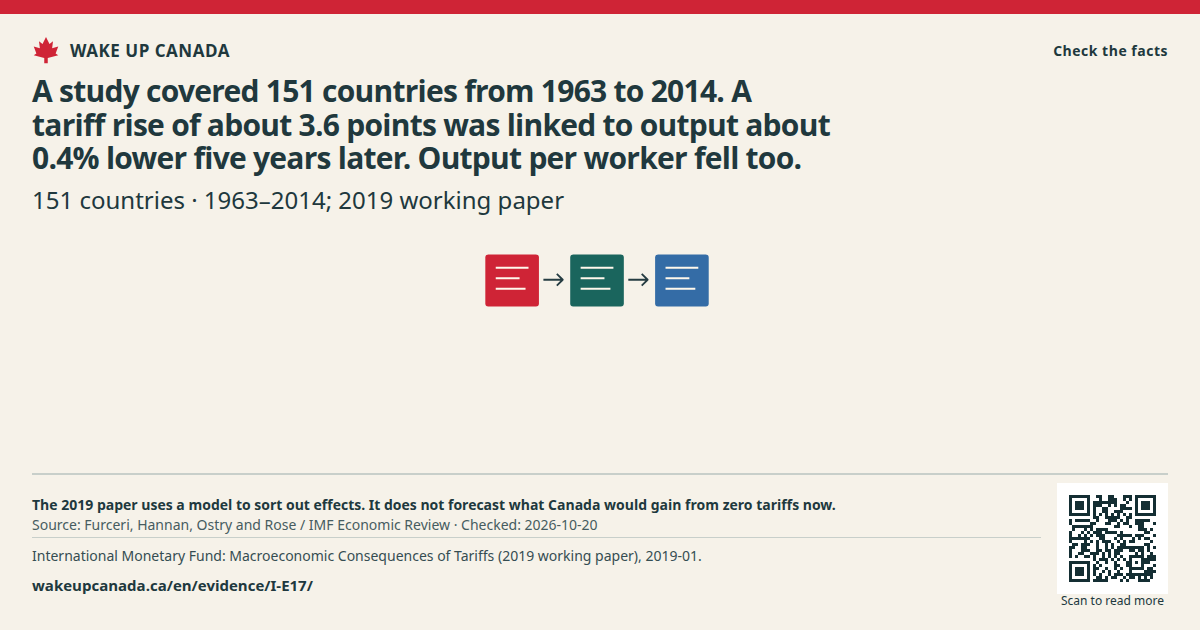
A study covered 151 countries from 1963 to 2014. A tariff rise of about 3.6 points was linked to output about 0.4% lower five years later. Output per worker fell too.

Checked 2026-10-20. Each record says what the source can and cannot show.

What this covers

Place: 151 countries
Time covered: 1963–2014; 2019 working paper

What this does not prove

The 2019 paper uses a model to sort out effects. It does not forecast what Canada would gain from zero tariffs now.

Read the source

Macroeconomic Consequences of Tariffs (2019 working paper) ↗

Furceri, Hannan, Ostry and Rose / IMF Economic Review · 2019-01

Where to look: Page 14: 3.6-percentage-point tariff shock, about 0.4% lower output five years later

Fixes and updates

No fact has changed in this version. If we fix a claim, we will add the date and explain the change here and in our list of fixes.

Sources & fixes →

WAKE UP CANADA

Share the case for change

Help more people see the facts and the plan.

A study covered 151 countries from 1963 to 2014. A tariff rise of about 3.6 points was linked to output about 0.4% lower five years later. Output per worker fell too.

Keep the source, date and notes with the image.

Checked:

What this does not show: The 2019 paper uses a model to sort out effects. It does not forecast what Canada would gain from zero tariffs now.

wakeupcanada.ca/en/evidence/I-E17/
Scan to open this page
Scan this code to read the full case.

Save an image

If the image opens in a new tab, press and hold it or use your browser’s save tool.

Sources and notes