A large gap between housing paths
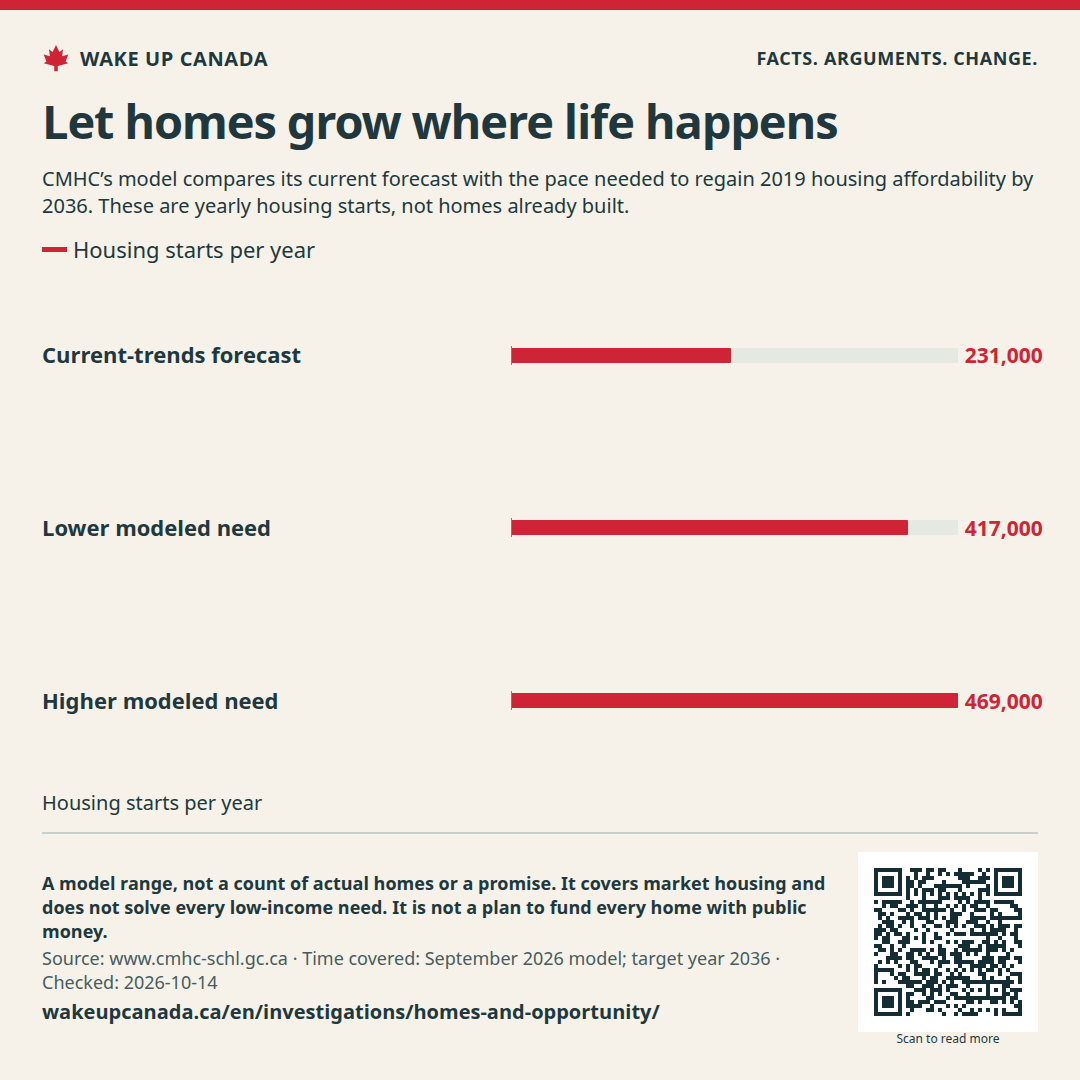
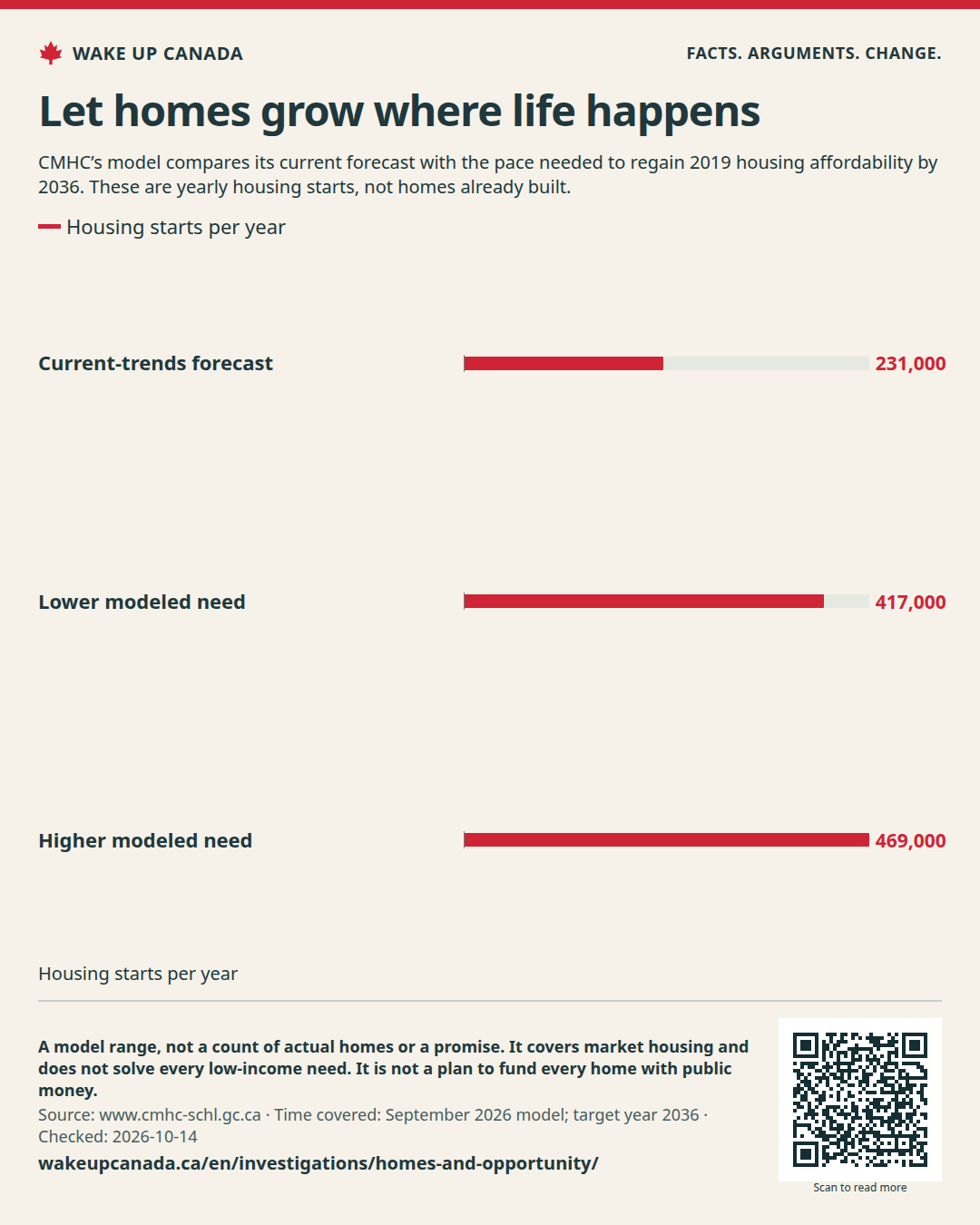
CMHC models two paths. Current trends give 231,000 home starts a year. It puts the need at 417,000 to 469,000 to bring costs back to 2019 levels by 2036, compared with incomes. [1]
Report · Published
Open the door to useful homes, short trips and more choice. Keep the housing evidence honest.
CMHC models two paths. Current trends give 231,000 home starts a year. It puts the need at 417,000 to 469,000 to bring costs back to 2019 levels by 2036, compared with incomes. [1]
Brian Greaney’s 2026 journal comment found code and model problems in the famous US study. We do not claim a known Canadian GDP loss. [3][5]
A good job should not come with a locked gate to the place where it is. We want homes near work, shops and safe ways to get around. End rules that block useful homes. Keep rules that guard people from real harm.
CMHC’s fall 2026 model puts Canada’s need at 417,000 to 469,000 housing starts a year. The aim is to regain 2019 levels of housing affordability by 2036. Its forecast under current trends is 231,000 starts a year. These are model results, not homes already built. They include homes built by private firms. They are not a bill for taxpayers.
[1]A 2023 CMHC study found that long approval times had the strongest link to poor housing affordability among the rule measures it tested. Its measure of density limits had the weakest link. This does not make every density rule sound. It does mean we must fix the whole path from a plan to a home, and test which changes work.
[2]A well-known US study put a large cost on housing limits near good jobs. But a 2026 journal comment by Brian Greaney found flaws in its code and model. Its revised model gave a much smaller gain. We will not use the old estimate as a settled fact. It was a model of US cities, not a measure of lost Canadian GDP.
[3][5]Our goal is a better daily life. Let small homes, flats and shops share more streets. Give builders a clear set of rules and a firm time for a reply. Plan water, schools and safe travel as homes grow. Judge success by rents, prices, travel time and homes people can use, not just plans stamped yes.
New homes need pipes, power and safe streets. Zoning changes alone cannot supply those things. Keep real safety checks and show the cost of the works each plan needs.
End remaining blanket bans on small multi-home buildings and nearby shops.
Publish decision times and reasons for delays, from the first filing to move-in.
Tie housing and street plans together. Count the full public cost.
Provinces and territories set housing laws. Local councils set plans and run permits. They must plan streets and services together.
No new grant or spending total is proposed. Rule changes and reporting still have admin costs; these have not been costed nationally. Any new public works, grants or guarantees need a separate costed proposal.
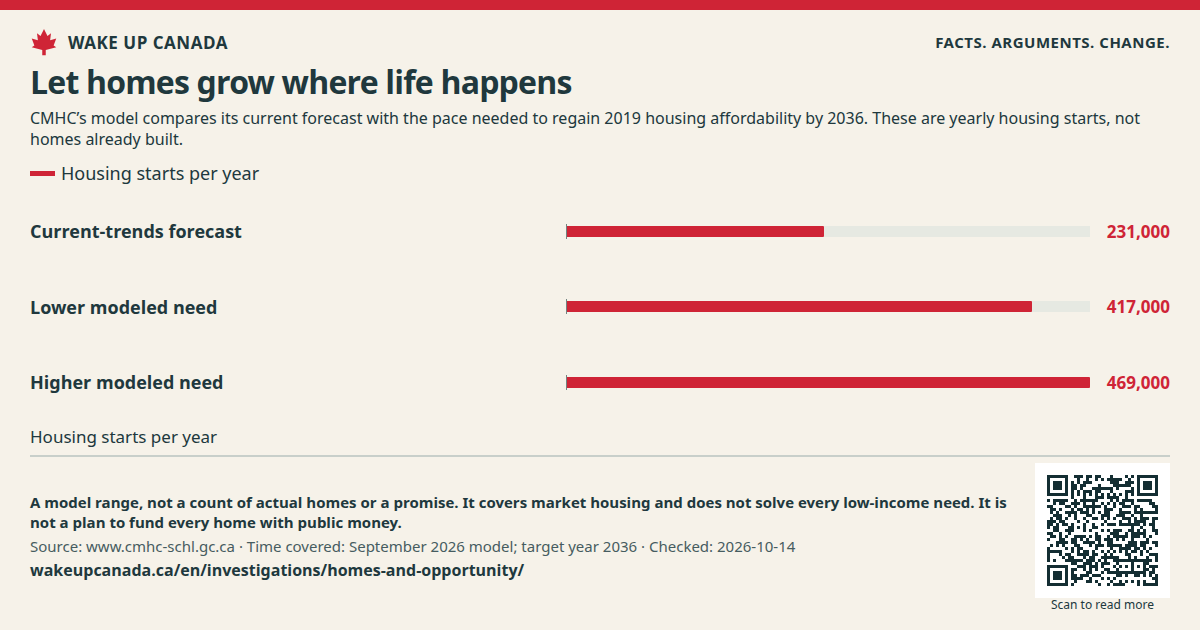
CMHC’s model compares its current forecast with the pace needed to regain 2019 housing affordability by 2036. These are yearly housing starts, not homes already built.
Housing starts per year · September 2026 model; target year 2036
A model range, not a count of actual homes or a promise. It covers market housing and does not solve every low-income need. It is not a plan to fund every home with public money.
Check the sources: CMHC: Fall 2026 Housing Supply Report
Each chart has its own dates, sources and limits. Open it to see the full data and download the figures.
Homes and places
Jobs and firms tend to group in cities. Homes, shops and good travel links should help people reach them.
2022 · Canadian dollars, billions
See the chart and the case ↗Growth and wealth
Canada's economy is much bigger than in 1981. Gains per person have been slow in the past decade. Look past the total.
2026 · Quarter 2 · Start of 2015 = 100
See the chart and the case ↗Source title in English
We credit their work and draw our own conclusions. A link is not an endorsement from them.
WAKE UP CANADA
Help more people see the facts and the plan.
Open the door to useful homes, short trips and more choice. Keep the housing evidence honest.
Keep the source, date and notes with the image.
Checked:
What this does not show: The CMHC numbers are a forecast range, not a promised saving. No verified Canadian GDP gain is claimed.
No account needed. Sharing does not sign you up for email.

If the image opens in a new tab, press and hold it or use your browser’s save tool.
This supports the whole cause. Emails are a separate choice.
Support totals are not available right now.
Each email counts once per cause. This does not sign a petition. Your name and email stay private. Only the total is public.
Homes & neighbourhoods · Report
Build good homes to rent and a fair path to own. Count the full cost and the risks.
Read the report ↗Imports & open trade · Report
A low price should be good news. Canada should let safe goods compete, no matter where they are made.
Read the report ↗Energy & nature · Report
Cheap power should stay cheap when we count the wires, waste and cleanup. The public should not get a hidden bill.
Read the report ↗